
Avimukta Kashi
Beyond time.
Kashi—Far Beyond a Mere City
Within the spiritual architecture of India, certain geographies transcend mere physical boundaries, defying categorization as ordinary towns or transient pilgrimage sites. These locations evolve into living philosophies, concentrated spiritual disciplines, and pulsating reservoirs of cosmic consciousness. Kashi stands at the very apex of this magnificent spiritual tradition.
Revered variously as Varanasi, Benaras, and Avimukta Kshetra, Kashi holds a designation within sacred lore that carries profound metaphysical weight. The epithet “Avimukta”—meaning “never forsaken” or “liberated”—signifies more than a spatial coordinate; it encapsulates an entire philosophy of ultimate liberation. The foundational significance of this sacred space is illuminated in the Jabala Upanishad, which declares:
“एष तरोरकत्वेऽविमुक्तो नाम क्षेत्रम्। एतदविमुक्तं प्रतिष्ठितं सत्ये प्रतिष्ठितमिति॥”
“अत्र हि जन्तोः प्राणेषूत्क्रममाणेषु रुद्रस्तारकं ब्रह्म व्याचष्टे येनासावमृती भूत्वा मोक्षी भवति। तस्मादविमुक्तमेव निषेवेत, अविमुक्तं न विमुञ्चेत्॥”
(Meaning: This Avimukta Kshetra is the supreme boat to cross the ocean of worldly existence, established firmly in the Supreme Truth. Here, at the final hour of mortal transition, Lord Rudra imparts the liberating Tarak-Brahman, through which the individual soul attains immortality and ultimate liberation. Therefore, a seeker must ever resort to Avimukta and never forsake it.)
The supremacy of Kashi does not rest merely on its unmatched antiquity. Rather, it is enshrined in the collective consciousness of Sanatan civilization as the eternal confluence of divine knowledge, devotion to Shiva, profound detachment, contemplative discipline, and the transcendent aspiration for moksha. Consequently, understanding any sacred artifact originating from Kashi requires looking far beyond its physical exterior. One must perceive the subtle lineage, classical discipline, ritual methodology, and cultural memory embedded within it.
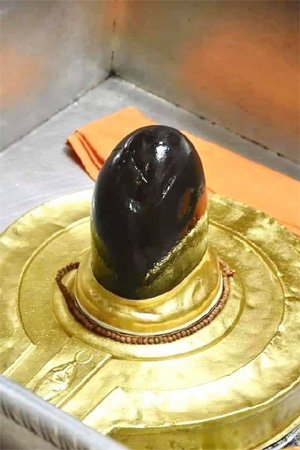
A civilisation
of remembrance.
The legacy of Kashi is not confined to its stone temples and riverside steps (ghats). It is woven from the intricate tapestry of Vedic study, Sanskrit literature, Puranic heritage, Shaivite devotion, ascetic traditions, ritual jurisprudence (karma-kanda), classical arts, philosophy, and folk wisdom.
Tradition is not
casual.
Because of this profound grounding, spiritual life in Kashi has never been treated as a casual or superficial pursuit.

Because of this profound grounding, spiritual life in Kashi has never been treated as a casual or superficial pursuit. Even the most intimate, daily ritual acts are performed with meticulous regard for scriptural order and sacred boundaries. The Skanda Purana, within its Kashi Khanda, extols the veneration of Lord Vimukteshwara in the Avimukta Kshetra, instructing:
“स्तुत्वा नत्वार्चयित्वा च यथाशक्ति यथामति।
अविमुक्ते विमुक्तेशं स्तूयते नम्यतेऽर्च्यते॥”
(Meaning: According to one’s capacity (yathashakti) and according to one’s understanding (yathamati), one should praise, prostrate before, and worship Lord Vimukteshwara within Avimukta.)
The convergence of two terms in this verse— yathashakti (according to one’s physical and material capacity) and yathamati (according to one’s intellectual and spiritual maturity)—reveals a vital truth. In spiritual conduct, genuine devotion, proper scriptural methodology, and sincerity of effort far outweigh empty external display. This principle provides the foundational lens through which we must examine the true significance of classically prepared religious articles.
Understanding
Classical Purity
In contemporary parlance, the word “purity” is frequently reduced to basic physical cleanliness or commercial quality control. However, within Sanatan tradition, the concept of purity (shuddhi) possesses an expansive, multidimensional scope.
True purity encompasses not merely the physical appearance of an item, but the intrinsic nature of the material (dravya), the conduct of its handler (aachara), the sanctity of the environment (sthana), the integrity of the manufacturing process (prakriya), its intended utility, and the inner disposition of the practitioner (antahkarana).
Classical jurisprudence dedicates extensive treatises to material purity (dravya shuddhi). For instance, the Manusmriti elaborates systematic guidelines regarding the purification of various substances alongside bodily hygiene:
“एष शौचस्य वः प्रोक्तः शरीरस्य विनिर्णयः।
नानाविधानां द्रव्याणां शुद्धेः शृणुत निर्णयम्॥”
(Meaning: Having declared the rules governing the purification of the physical body, listen now to the definitive rules regarding the purification of various substances.)
This establishes a fundamental axiom: within Sanatan heritage, physical substances are never viewed as inert, lifeless matter. Their ritual applications, material origins, and the methodologies employed in their creation carry profound spiritual consequences. Consequently, traditional standards naturally evolved for every consecrated item utilized in worship—whether floral offerings, sacred water, sandalwood, sacred ash (bhasma), kusha grass, holy basil (tulsi), rudraksha beads, or the sacred thread (yajnopavita).
तदहं भक्त्युपहृतमश्नामि प्रयतात्मनः॥”
(Meaning: Whosoever offers Me with devotion a leaf, a flower, a fruit, or water, that offering—presented with devotion by a purified intellect—I accept.)
Material.
Method.
Bhava.
Commenting on this verse, Adi Shankaracharya associates prayataatmanah with a seeker of purified intellect. The profound message embedded here is unmistakable: the value of a sacred offering is never determined solely by its external opulence or material cost. Even a humble leaf, imbued with genuine reverence, becomes a valid vehicle for divine communion.
Simultaneously, this does not render the quality or purity of the ritual item irrelevant. Rather, it underscores that dravya (material substance), vidhi (methodology), and bhava (inner emotion) must function in absolute harmony. The true excellence of an authentic spiritual artifact lies not in inflated commercial branding or elaborate packaging, but in its scriptural authenticity, respectful production, and profound alignment with the seeker’s reverence.

Rudraksha
Among spiritual artifacts, the rudraksha holds a uniquely revered place in Shaivite traditions. The Rudraksha Jabala Upanishad records a profound dialogue between Lord Kalagni Rudra and Bhusunda, elucidating the origin, classification, and wearing protocols of these sacred beads. Regarding their cosmic origin, the text states:
“तत्राश्रुबिन्दवो जाता महारुद्राक्षवृक्षकाः।
स्थावरत्वमनुप्राप्य भक्तानुग्रहकारणात्॥”
(Meaning: From the tear-droplets of Rudra arose the majestic Rudraksha trees, manifesting in the plant kingdom out of supreme compassion for the upliftment of devotees.)
Further classifying their divine aspects, the Upanishad delineates the multifaceted nature of the beads, noting of the five-faced variety:
“पञ्चवक्त्रं तु रुद्राक्षं पञ्चब्रह्मस्वरूपकम्।”
(Meaning: The five-faced Rudraksha is the direct embodiment of the Panchabrahman.)
This underscores a critical principle: classical texts never define a sacred item solely through anatomical description. Every authentic artifact is intimately bound to presiding deities, specific mantras, traditional wearing injunctions, and deep cosmic symbolism. Therefore, the authenticity of a rudraksha cannot be validated merely by visual imitation. Its genuine classification, structural integrity, and proper textual context are indispensable.
Tradition
deserves
honesty.
Respecting classical tradition does not grant license to accept unverified modern marketing claims without scrutiny. Maintaining intellectual and spiritual honesty is paramount in contemporary times.
If a traditional practice or product attribute is explicitly validated by scriptural texts, it must be presented accurately within its proper context. If a practice stems from unbroken folk custom (lokaparampara), it should be honored as such. Conversely, claims that lack scriptural validation or empirical backing must never be imposed as absolute scriptural injunctions. Furthermore, sacred items should never be marketed with unverified, miraculous clinical or supernatural guarantees.
True respect for classical tradition demands absolute integrity: honoring scripture where scripture provides the authority, respecting authentic living traditions where tradition holds sway, and exercising complete honesty in language where empirical evidence is bounded. This represents the ultimate benchmark of classical authenticity in the modern era.
Six dimensions.
One discipline.
The integrity of a sacred offering cannot be measured by a single metric. True purity encompasses several distinct dimensions:
Material Integrity (Dravya Shuddhi)
Ensuring the substance is genuine, sustainably sourced, and perfectly suited for its sacred purpose.
Care in Creation (Prakriya)
Avoiding careless, rushed mass-production methods that violate the meditative dignity required for crafting sacred items.
Traditional Context (Parampara)
Aligning the presentation and purpose of the artifact with its true historical and scriptural lineage.
Transparency of Information (Prakatya)
Providing seekers with honest, clear, and unexaggerated knowledge regarding the item they utilize.
Spiritual Sensitivity
Resisting the reduction of sacred items into purely secular fashion statements or sterile interior decor.
Purity of Intent (Bhava)
Maintaining an underlying corporate and personal ethos rooted in deep reverence for the sacred traditions being served.

A name is not
a lineage.
The intrinsic value of an artifact originating from Kashi cannot be reduced to a simple geographical label or a commercial keyword. True connection to Kashi runs infinitely deeper.
The legacy of Kashi unites the worship of Shiva, the sacred flow of the Ganga, immemorial temple traditions, Sanskrit scholarship, Puranic heritage, ascetic lineages, traditional craftsmanship, classical music, and vibrant ritual culture. An authentic Kashi-based spiritual offering derives its true worth from its capacity to embody this monumental heritage through responsible, respectful stewardship rather than empty promotional rhetoric. Authenticity is never established by hollow claims; it is forged through rigorous process, verifiable integrity, and honorable conduct.
Bridging
Heritage &
Consciousness.
Within this expansive philosophical and practical framework, the vision of KASHITVAM™ finds its true purpose. The core mission of Kashitvam extends far beyond commercial packaging or online distribution. Its identity is anchored in serving as an authentic bridge connecting the timeless spiritual heritage of Kashi and classical Sanatan traditions with the genuine needs of modern seekers.
The name Kashitvam evokes the very essence and state of being rooted in Kashi. This identity gains profound meaning only when coupled with uncompromising quality, absolute transparency, deep respect for tradition, and responsible presentation. For an authentic spiritual brand, this responsibility is sacred, recognizing that patrons acquire these items not merely as commodities, but as vital extensions of their personal faith, family heritage, and spiritual identity. In this delicate ecosystem, trust itself becomes the ultimate currency.
Ancient roots.
Contemporary expression.
The contemporary seeker demands uncompromising quality, aesthetic elegance, structural convenience, and total reliability. Simultaneously, within the domain of spiritual heritage, they rightly demand that their traditions remain free from frivolous commodification or disrespectful shortcuts.
This tension defines the primary challenge for modern Indian spiritual enterprises: maintaining unwavering fidelity to foundational roots while navigating contemporary realities. It requires presenting products with sophisticated refinement without reducing sacred traditions to superficial luxuries. It demands seamless accessibility while refusing to compromise traditional protocol.
Modern Aesthetic
Modern aesthetic presentation united with traditional spiritual sensitivity.
Cultural Dignity
Clean, sophisticated packaging anchored in undeniable cultural dignity.
Material Responsibility
Exceptional material quality governed by a profound sense of responsibility toward underlying scriptural contexts.
The distinctive identity of KASHITVAM™ is forged within this exact balance. This structural commitment separates transient commercial vendors from truly heritage-oriented spiritual institutions.
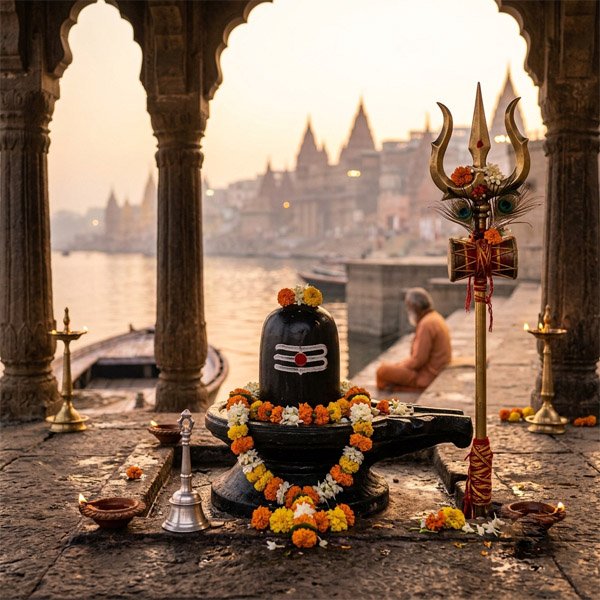
A thread carrying lineage.
The importance of this rigorous philosophy becomes glaringly apparent when examining foundational ritual items such as the Yajnopavita (Sacred Thread). The Upavita is far more than a simple length of cotton yarn; it is an enduring symbol of spiritual initiation, sacred duty, and ancestral lineage governed by strict ritual protocols.
Presenting such an item within a modern framework demands an elevation of standards. Attractive presentation must be matched by absolute respect for its sacred purpose. This intersection allows modern design sensibilities and classical consciousness to converge harmoniously. Architectural motifs from the ghats of Kashi, motifs drawn from Shaivite iconography, classical Indian ornamentation, and the aesthetic grace of Devanagari script find their true justification here—not as superficial decoration, but as authentic expressions of cultural identity. For an enterprise like Kashitvam, packaging transcends containment; it serves as a respectful cultural introduction.
Kashi is not
merely felt.
In spiritual discourse, the phrase “the energy of Kashi” is an evocative and beautiful expression. However, deploying it responsibly requires linguistic and intellectual precision.
It is methodologically incorrect to present this subtle cultural atmosphere as a quantifiable physical force measurable by scientific instruments unless empirical validation exists. Instead, the spiritual “energy” of Kashi is most accurately understood as the cumulative resonance of millennia of intensive sadhana, unbroken pilgrimage memory, continuous devotion to Shiva, profound scriptural scholarship, sacred riverside rituals, temple sanctity, and the collective meditative realizations of countless seekers across generations.
The Avimukta concept of the Jabala Upanishad provides the ideal framework for this understanding, placing Kashi within the supreme realm of self-knowledge and contemplation. When an individual brings an authentic, Kashi-associated spiritual artifact into their personal sanctuary, they are not acquiring a magical talisman. Rather, they are anchoring a tangible link to a profound cultural memory and a time-honored symbol of spiritual aspiration.
Sacred symbols
need their
context.
The advent of global e-commerce has enabled sacred artifacts from India to reach households across continents. This expansion represents an unprecedented opportunity for the global dissemination of Sanatan heritage. Yet, it carries an equally monumental ethical responsibility.
In the digital age, abstracting sacred symbols from their foundational context and converting them into generic visual assets is effortless:
Conversely, when these items are presented alongside their historical context, scriptural lineage, proper protocols of usage, and deep cultural meaning, they transform from static objects into vibrant conduits of an unbroken living tradition. This represents the ultimate imperative of modern classical integrity: preserving heritage not as a dead artifact trapped in a museum display case, but as a living, breathing reality integrated with dignity into contemporary existence.
Purity as an
operational standard.
Within the operational philosophy of KASHITVAM™, “purity” transcends marketing terminology; it serves as an uncompromising operational benchmark. This commitment is reflected in several core principles:
This rigorous mindset elevates an enterprise from a conventional retail storefront to an institution of genuine cultural responsibility.
An ever-present
continuum.
True cultural heritage is never preserved merely by locking ancient artifacts away in climate-controlled vaults. The essence of heritage lies in translating timeless values inherited from antiquity into living, meaningful realities in the present, securing their transmission for future generations.
Kashi stands as the ultimate, breathing embodiment of this continuous flow. Within its boundaries, ancient sanctuaries stand shoulder-to-shoulder with modern urban life. Vedic chanting echoes alongside contemporary academic pursuits. Ascetic detachment coexists with vibrant enterprise. Scripture, folklore, music, craftsmanship, and a constantly evolving urban landscape thrive as one unified organism. Consequently, the legacy of Kashi is never static; it is perpetually dynamic and vibrantly alive.
The true potential of KASHITVAM™ rests squarely within this philosophical framework: translating the timeless soul of Kashi into the language of modern existence without ever diluting its sacred core.
Moving from
Material Object
to Living Tradition.
Kashi is an entity to be deeply experienced, not merely observed. Its riverside steps are monuments of history; its shrines are centers of cosmic alignment; its winding pathways are corridors of awakening; its traditions are living rivers of wisdom. Behind every facet lies centuries of memory, intense spiritual discipline, unyielding faith, and cultural continuity.
Ancient heritage.
Living consciousness.
The profound scriptural references explored throughout—the liberating Avimukta of the Jabala Upanishad, the disciplined devotion of Vimukteshwara worship detailed in the Skanda Purana, the sacred origins of the Rudraksha, and the inner purity demanded by the Bhagavad Gita—collectively remind us that Sanatan tradition defines sacred objects far beyond their physical composition. Their true definition embraces their context, methodology, purpose, and inner feeling.
Therefore, the enduring value of classically pure products from Kashi extends far beyond utilitarian ritual utility. Their supreme significance lies in their capacity to serve as living bridges, carrying the memory of an unbroken civilization directly into the rhythm of contemporary human life.
Herein lies the true identity of KASHITVAM™. By harmonizing uncompromised material quality, absolute transparency, scriptural authenticity, profound respect for Kashi’s cultural legacy, and sophisticated modern presentation, Kashitvam transcends ordinary commerce. It emerges as a dedicated embodiment of reverence where ancient heritage is honored, classical consciousness is articulated with clarity, modern excellence is embraced, and the profound dignity of sacred traditions is safeguarded with unwavering devotion.
True heritage is never confined to the past. True heritage is that which the living present understands, honors, and carries forward with profound purpose. And Kashi—proclaimed by ancient seers as Avimukta—remains the eternal, beating heart of that unbroken continuum.