Why Tulsi Kanthi Malas Hold Deep Significance in Daily Japa
Understanding the traditional significance of Tulasi and its place in daily devotional practice
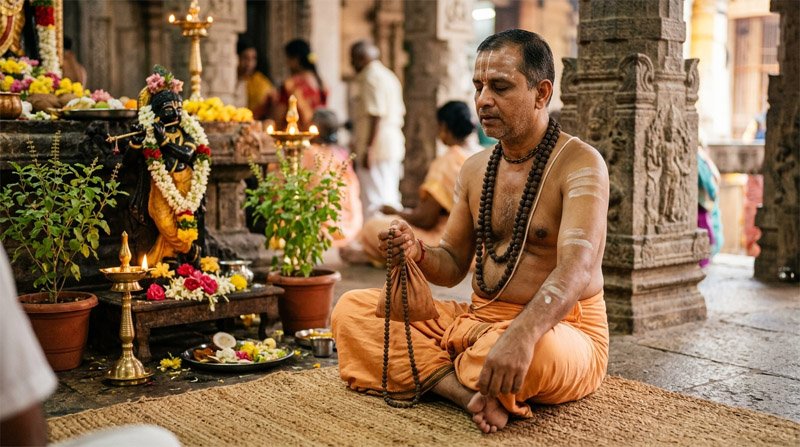
There are sacred objects in Hindu tradition whose significance goes far beyond their physical form. A lamp is more than a flame, a temple bell is more than sound, and a sacred thread is more than a strand of cotton. In the same way, Tulasi is more than a plant. For generations of devotees, Tulasi (तुलसी) has been regarded as deeply connected with the worship of Śrī Hari—especially Viṣṇu and Kṛṣṇa. Her leaves are offered in worship, her presence is cultivated in the home, and her wood is traditionally fashioned into mālās used for remembrance and japa.
This is why a Tulsi Kanthi Mala is not merely an ornament. It is traditionally understood as a visible and tactile reminder of one’s relationship with Bhagavān. When worn around the neck, it remains close to the body throughout ordinary life. When used in devotional practice, the same sacred material becomes part of a disciplined practice of remembering and repeating the Divine Name.
The Voice of the Scriptures: Padma Purāṇa
The importance of Tulasi in this tradition is repeatedly expressed in Purāṇic and Vaiṣṇava literature. One of the clearest statements appears in the Padma Purāṇa, where Tulasi is described as especially dear to Viṣṇu:
वासुदेवादयो देवा वसन्ति तुलसीदले ।
सर्वदा सर्वकालेषु तुलसी विष्णुवल्लभा ॥Vāsudevādayo devā vasanti tulasī-dale |
sarvadā sarva-kāleṣu tulasī viṣṇu-vallabhā ||
The meaning is: “The deities beginning with Vāsudeva dwell in the Tulasi leaf; at all times and in every season, Tulasi is beloved of Viṣṇu.”
Tulasi: More Than an Offering
The Padma Purāṇa repeatedly emphasizes that Tulasi has an exceptional place among offerings to Viṣṇu. Another passage states:
त्यक्त्वा तु मालतीपुष्पं मुक्त्वा च सरसीरुहम् ।
गृहीत्वा तुलसीपत्रं भक्त्या माधवमर्चयेत् ॥Tyaktvā tu mālatī-puṣpaṁ muktvā ca sarasīruham |
gṛhītvā tulasī-patraṁ bhaktyā Mādhavam arcayet ||
The meaning is: “Leaving aside even jasmine and lotus, one should take a Tulasi leaf and worship Mādhava with devotion.” The important word here is bhaktyā — भक्त्या, meaning “with devotion.”
From Tulasi Leaf to Tulasi Mālā
The tradition does not stop with offering Tulasi leaves. Vaiṣṇava ritual literature also explicitly discusses ornaments and mālās made from Tulasi wood. The Hari-bhakti-vilāsa cites Purāṇic authorities concerning the wearing of Tulasi-wood ornaments:
ततः कृष्णार्पिता माला धारयेत्तुलसीदलैः ।
पद्माक्षैस्तुलसीकाष्ठैः फलैर्धात्र्याश्च निर्मिताः ।
धारयेत्तुलसीकाष्ठभूषणानि च वैष्णवः ॥Tataḥ kṛṣṇārpitā mālā dhārayet tulasī-dalaiḥ |
padmākṣais tulasī-kāṣṭhaiḥ phalair dhātryāś ca nirmitāḥ |
dhārayet tulasī-kāṣṭha-bhūṣaṇāni ca vaiṣṇavaḥ ||
The meaning is: “Thereafter, a Vaiṣṇava should wear a garland offered to Kṛṣṇa, and garlands made from Tulasi leaves, lotus seeds, Tulasi wood, or fruits of the dhātrī tree; according to one’s inclination, one may wear ornaments made from Tulasi wood.”
The Kanthi Mala as a Sign of Devotional Identity
One of the most beautiful dimensions of the Tulsi Kanthi Mala is its association with belonging. A devotee wearing Tulasi around the neck is not merely displaying jewellery. Traditionally, the mālā can function as a continual reminder of one’s relationship with Bhagavān and one’s commitment to a devotional path.
Tulasi and the Discipline of Daily Japa
Japa means repeated recitation of a mantra or Divine Name. At one level, japa is simple: repeat the mantra. Yet anyone who has attempted regular japa knows that the mind does not remain simple. It wanders. A mālā introduces a physical rhythm into this practice. One bead, one repetition, one remembrance.
Kanthi Mala vs. Japa Mala
It is also useful to distinguish between a kanthi mālā and a japa mālā. A Tulsi Kanthi Mala is primarily a neck mala associated with devotional identity and continual remembrance. A Tulsi Japa Mala is principally used for counting repetitions of a mantra in hand. Both stem from the same sacred tradition.
A Traditional Prayer for the Tulsi Mālā
तुलसीकाष्ठसम्भूते ! माले ! कृष्णजनप्रिये !
बिभर्मि त्वामहं कण्ठे कुरु मां कृष्णवल्लभम् ।Tulasī-kāṣṭha-sambhūte! māle! kṛṣṇa-jana-priye!
bibharmi tvām ahaṁ kaṇṭhe kuru māṁ kṛṣṇa-vallabham.
The meaning: “O mālā born from Tulasi wood, beloved of the devotees of Kṛṣṇa, I wear you around my neck; make me dear to Kṛṣṇa.”
Scriptural References
- Padma Purāṇa — Sṛṣṭi-khaṇḍa, Chapter 61: Tulasi-stuti and daily reverence.
- Padma Purāṇa — Pātāla-khaṇḍa, Chapter 98: Tulasi’s special relationship with Viṣṇu and Mādhava worship.
- Padma Purāṇa — Uttara-khaṇḍa, Chapter 61: Forms of daily Tulasi-bhakti.
- Hari-bhakti-vilāsa — Vilāsa 4 & 17: Vaiṣṇava ornaments, Tulasi-kāṣṭha mālās, and japa practices.
- Viṣṇu-dharmottara Purāṇa & Skanda Purāṇa: Mālā-dhāraṇa procedure and offering before wearing.
श्री तुलस्यै नमः ।
Salutations to Śrī Tulasi.