Durgakund Mandir, Kashi:
Where Maa Durga Chose to Stay
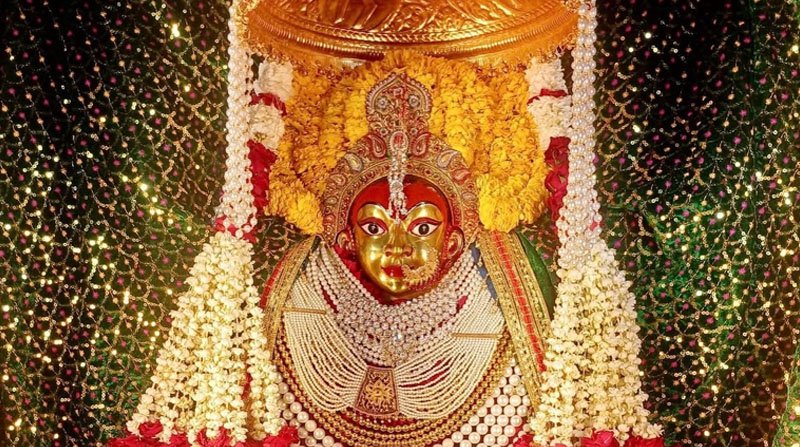
To understand Durgakund Mandir is to look beyond the visible structure of a temple. Its red walls, rising shikhara and sacred kund are only the physical expression of something much deeper: the enduring idea of Shakti as the protecting, nourishing and transformative power of the Divine Mother.
Kashi has always been described as a city where different dimensions of the sacred exist together. Shiva and Shakti, asceticism and devotion, death and liberation, stillness and movement — all find their place here. Within that sacred landscape, Durgakund represents the powerful presence of the Goddess.
The Goddess of Kashi: More Than a Deity, the Living Power of Shakti
In the Shakta tradition, Devi is not merely one deity among many. She is understood as the Divine Power through which the universe becomes active, conscious and alive. The Goddess is worshipped as Prakriti, as Shakti, as the Mother, as wisdom, as compassion and as the power that protects dharma.
This profound understanding is beautifully expressed in the Devi Mahatmya, where the Goddess is praised as the presence of consciousness, intelligence, power, peace, faith and the maternal principle within all beings. In other words, Shakti is not confined to the sanctum of a temple; the sacred tradition recognises Her presence throughout life itself.
या देवी सर्वभूतेषु शक्तिरूपेण संस्थिता ।
नमस्तस्यै नमस्तस्यै नमस्तस्यै नमो नमः ॥
Pronunciation: Ya Devi Sarva-Bhuteshu Shakti-Rupena Samsthita | Namastasyai Namastasyai Namastasyai Namo Namah ||
“To the Goddess who abides in all beings in the form of power, repeated salutations to Her.”
This is one of the deepest ideas in Devi worship. The Goddess is not restricted to a distant celestial realm. The Shakta vision recognises divine power in the very forces through which life moves, grows, thinks, protects, creates and transforms.
The Sacred Legend of Durgakund: When the Goddess Chose Kashi
The religious memory associated with Durga’s presence in Kashi reaches beyond the history of the present temple structure. A particularly important narrative is preserved in the Devi Bhagavata Purana, where the story of King Subahu, Princess Shashikala and Prince Sudarshana becomes connected with the Goddess’s protective presence in Kashi.
The story unfolds around devotion, divine intervention and the protection of a devotee. Sudarshana turns towards the Goddess in a moment of crisis, and the narrative culminates in the Goddess granting protection and blessing.
King Subahu then requests the Goddess to remain in Kashi and protect the sacred city. The significance of this tradition is profound. It presents Kashi not merely as a city where a temple to Durga happens to exist, but as a sacred landscape in which the Divine Mother herself is remembered as a protecting presence.
सर्वमङ्गलमाङ्गल्ये शिवे सर्वार्थसाधिके ।
शरण्ये त्र्यम्बके गौरि नारायणि नमोऽस्तु ते ॥
Pronunciation: Sarva-Mangala-Mangalye Shive Sarvartha-Sadhike | Sharanye Tryambake Gauri Narayani Namostute ||
“O Goddess who is the source of all auspiciousness, who grants the fulfilment of every worthy purpose, who is the refuge of all — O Gauri, O Narayani, I bow to You.”
The spiritual beauty of this prayer lies in the word Sharanaye — the One who becomes a refuge. A devotee does not approach the Goddess merely as a source of worldly achievement, but as the sacred refuge in times of uncertainty, fear and inner struggle.
The Present Temple and the Much Older Sacred Tradition
It is important to distinguish between the history of the present temple structure and the much older religious tradition surrounding the Goddess in Kashi.
The existing Durgakund temple is generally associated with the eighteenth century and is traditionally connected with the patronage of Rani Bhavani of Natore. The sacred memory of Durga’s presence in Kashi, however, belongs to a much older religious world preserved in Hindu sacred literature.
Therefore, the historical age of the visible building should not be confused with the antiquity of the religious tradition. The structure belongs to a particular historical period; the devotional memory of the Goddess belongs to a much deeper sacred continuity.
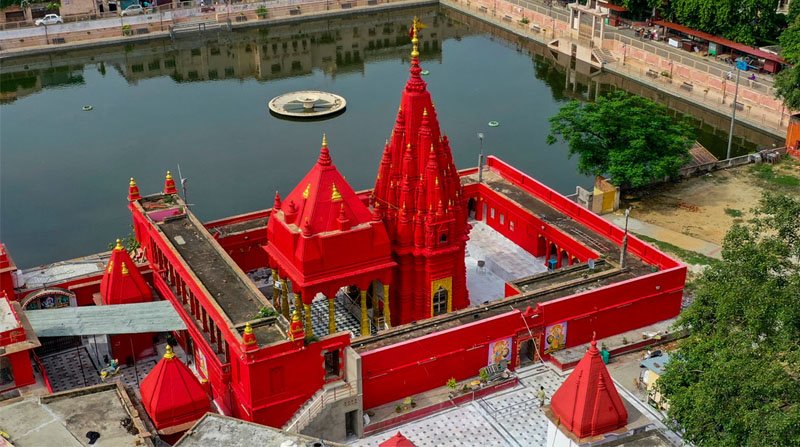
Durga Kund: Water, Temple and Shakti in One Sacred Landscape
The large kund beside the temple is one of the defining features of Durgakund. In the sacred geography of India, water is never merely a physical element. It represents purification, continuity, life, renewal and pilgrimage.
At Durgakund, the symbolism becomes particularly beautiful. The sacred water lies beside the shrine of the Goddess, while the temple rises vertically towards the sky. Water, earth, architecture and devotion come together in a single sacred composition.
One can almost read the landscape symbolically: the kund represents purification and flow, the temple represents presence, and the rising shikhara represents the movement of consciousness upwards.
The Red Temple: A Visual Expression of Shakti
One of the first things that captures the eye at Durgakund is the strong red and ochre character of the temple. Red has a deep symbolic vocabulary within Shakta traditions. It evokes energy, life, vitality, courage, fertility and divine force.
The Goddess is therefore not represented only as a gentle mother. She is also the power that confronts disorder, destroys destructive forces and restores balance. Compassion and strength are not opposites in the Shakta vision; they are two expressions of the same Divine Mother.
जयन्ती मङ्गला काली भद्रकाली कपालिनी ।
दुर्गा शिवा क्षमा धात्री स्वाहा स्वधा नमोऽस्तु ते ॥
Pronunciation: Jayanti Mangala Kali Bhadrakali Kapalini | Durga Shiva Kshama Dhatri Svaha Svadha Namostute ||
“Salutations to the Goddess in Her many forms — auspicious, fierce, protective, compassionate, sustaining and sacred.”
Durgakund During Sharadiya Navratri: When Kashi Becomes a Celebration of Shakti
During Sharadiya Navratri, Durgakund takes on a special spiritual atmosphere. The temple becomes a powerful gathering place of devotees, lamps, flowers, incense, bells, conch sounds, devotional singing and traditional worship.
Navratri is not simply a festival lasting nine nights. It is a period in which the devotee consciously turns towards the many dimensions of Devi — from purity and discipline to courage, wisdom, transformation and spiritual fulfilment.
Culminating in Vijayadashami
The Nine Forms of Navadurga
“Ya Devi Sarvabhuteshu”: The Goddess Present in All Beings
Among the most profound passages of the Devi Mahatmya is the repeated invocation beginning with “Ya Devi Sarvabhuteshu.” The Goddess is praised as present within all beings in many forms — as consciousness, intelligence, power, peace, faith, compassion and the maternal principle.
This teaching transforms the meaning of worship. If the Divine Mother is recognised in consciousness, then awareness itself becomes sacred. If She is recognised as intelligence, wisdom becomes sacred. If She is recognised as peace, then inner tranquillity becomes a form of divine presence. If She is recognised as the maternal principle, then protection, care and nourishment become sacred expressions of Shakti.
या देवी सर्वभूतेषु चेतनेत्यभिधीयते ।
नमस्तस्यै नमस्तस्यै नमस्तस्यै नमो नमः ॥
Pronunciation: Ya Devi Sarva-Bhuteshu Chetanety Abhidhiyate | Namastasyai Namastasyai Namastasyai Namo Namah ||
“To the Goddess who is known as consciousness in all beings, repeated salutations to Her.”
या देवी सर्वभूतेषु बुद्धिरूपेण संस्थिता ।
नमस्तस्यै नमस्तस्यै नमस्तस्यै नमो नमः ॥
Pronunciation: Ya Devi Sarva-Bhuteshu Buddhi-Rupena Samsthita | Namastasyai Namastasyai Namastasyai Namo Namah ||
“To the Goddess who abides in all beings in the form of intelligence, repeated salutations to Her.”
या देवी सर्वभूतेषु शान्तिरूपेण संस्थिता ।
नमस्तस्यै नमस्तस्यै नमस्तस्यै नमो नमः ॥
Pronunciation: Ya Devi Sarva-Bhuteshu Shanti-Rupena Samsthita | Namastasyai Namastasyai Namastasyai Namo Namah ||
“To the Goddess who abides in all beings in the form of peace, repeated salutations to Her.”
या देवी सर्वभूतेषु मातृरूपेण संस्थिता ।
नमस्तस्यै नमस्तस्यै नमस्तस्यै नमो नमः ॥
Pronunciation: Ya Devi Sarva-Bhuteshu Matri-Rupena Samsthita | Namastasyai Namastasyai Namastasyai Namo Namah ||
“To the Goddess who abides in all beings in the form of the Mother, repeated salutations to Her.”
The Goddess as Refuge: “Sharanagata Dinarta…”
One of the most moving prayers of the Devi Mahatmya presents the Goddess as the compassionate refuge of those who approach Her in distress. This dimension of Devi worship is particularly meaningful during Navratri, when devotees come before the Mother not merely to ask for worldly success, but to seek courage, protection, clarity and inner strength.
शरणागतदीनार्तपरित्राणपरायणे ।
सर्वस्यार्तिहरे देवि नारायणि नमोऽस्तु ते ॥
Pronunciation: Sharanagata-Dinarta-Paritrana-Parayane | Sarvasyarti-Hare Devi Narayani Namostute ||
“O Goddess devoted to protecting those who seek refuge, O Narayani who removes the suffering of all, I bow to You.”
The beauty of this prayer is that it does not promise a life without difficulty. Instead, it places faith in the presence of a higher power that gives the devotee strength to pass through difficulty.
The Argala Stotram and the Prayer of Navratri
The Argala Stotram is traditionally recited as part of the Durga Saptashati worship sequence. Its verses express a range of devotional aspirations: strength, victory, health, prosperity, dignity and freedom from hostility.
ॐ जय त्वं देवि चामुण्डे जय भूतापहारिणि ।
जय सर्वगते देवि कालरात्रि नमोऽस्तु ते ॥
Pronunciation: Om Jaya Tvam Devi Chamunde Jaya Bhutapaharini | Jaya Sarvagate Devi Kalaratri Namostute ||
“Victory to You, O Goddess Chamunda; victory to You who removes affliction. O Goddess who pervades all, O Kalaratri, salutations to You.”
रूपं देहि जयं देहि यशो देहि द्विषो जहि ।
Pronunciation: Rupam Dehi Jayam Dehi Yasho Dehi Dvisho Jahi.
“Grant beauty and excellence, grant victory and honour, and remove hostility.”
देहि सौभाग्यमारोग्यं देहि मे परमं सुखम् ।
Pronunciation: Dehi Saubhagyam Arogyam Dehi Me Paramam Sukham.
“Grant auspiciousness, health and the highest form of happiness.”
The Architecture of Durgakund: A Temple That Rises Like a Flame
The present Durgakund temple is recognised for its distinctive red appearance and its North Indian Nagara architectural character. Its upward-rising shikhara gives the shrine a strong vertical presence, creating the visual impression of a sacred structure moving towards the sky.
The architecture becomes even more striking when viewed together with the kund. The horizontal expanse of water contrasts with the vertical movement of the temple. The result is a landscape in which stillness and ascent, water and fire, earth and sky seem to meet.
Is the Deity at Durgakund Considered Swayambhu?
Local religious tradition regards the image of Maa Durga at Durgakund as self-manifested, or swayambhu. Such a statement belongs to the sacred belief and devotional tradition surrounding the shrine and should be distinguished from an independent archaeological claim about the physical origin of the image.
For a pilgrim, however, the deeper meaning of a swayambhu tradition is that the sacred presence is believed to belong to the place itself rather than being created merely by human intention.
Durgakund and the Sacred Southern Landscape of Kashi
Durgakund forms part of an important sacred landscape in southern Kashi, close to the areas associated with Tulsi Manas Temple and Sankat Mochan. For a pilgrim, this creates a remarkable spiritual journey through different expressions of Sanatana Dharma.
At Durgakund, one encounters Devi Shakti. Nearby, the memory of Tulsidas and Rama-bhakti becomes prominent. At Sankat Mochan, Hanuman devotion occupies the centre. And beyond all of these sacred forms remains the eternal presence of Kashi and Vishvanatha.
The experience is not one of competing traditions. It is a reminder of how the sacred landscape of Kashi allows many forms of devotion to exist within one spiritual universe.
Why Durgakund Feels Different During Navratri
A pilgrimage is not simply about seeing a monument. It is about returning from a sacred place with something awakened within oneself.
At Durgakund during Navratri, the devotee encounters three layers of pilgrimage: darshan, the sight of the Goddess; shravan, the hearing of sacred chants, bells and stotras; and finally antar-darshan, the inward act of recognising what the Goddess represents within one’s own life.
The real question therefore becomes simple: What kind of strength do I need? Courage? Discipline? Wisdom? Compassion? Freedom from fear? The answer may be different for every devotee.
सर्वस्वरूपे सर्वेशे सर्वशक्तिसमन्विते ।
भयेभ्यस्त्राहि नो देवि दुर्गे देवि नमोऽस्तु ते ॥
Pronunciation: Sarva-Svarupe Sarveshe Sarva-Shakti-Samanvite | Bhayebhyas Trahi No Devi Durge Devi Namostute ||
“O Goddess who is present in every form, O Sovereign of all, endowed with every power, protect us from all fears. O Durga, I bow to You.”
The Deeper Meaning of Durga: Crossing the Inner Fortress
The word “Durga” can evoke the idea of that which is difficult to cross, difficult to approach or difficult to overcome. On the spiritual level, this symbolism can be turned inward.
The most difficult fortress may not always be outside us. Sometimes it is the fortress of fear, anger, attachment, pride, confusion and insecurity within the mind.
In that sense, the worship of Durga becomes a prayer for the strength to cross difficult inner terrain. The Goddess becomes a symbol of the courage required to confront what weakens us and the wisdom required to return to dharma.
What Navratri Ultimately Teaches: Do Not Leave the Shakti at the Temple
During Navratri, devotees light lamps, offer flowers, recite stotras, visit temples and bow before the Goddess. Yet the deeper purpose of worship is not complete if the qualities invoked before the murti remain confined to the temple.
If Devi is recognised as consciousness, then awareness itself deserves reverence. If She is recognised as intelligence, wisdom becomes sacred. If She is recognised as power, strength should be used responsibly. If She is recognised as peace, one should cultivate peace within oneself. If She is recognised as the Mother, protection, compassion and nourishment become sacred duties.
This is where Navratri becomes more than a festival. It becomes an inner discipline — a reminder that divine power is not merely something to be worshipped outside us, but something whose higher qualities can be cultivated within human life.
सर्वमङ्गलमाङ्गल्ये शिवे सर्वार्थसाधिके ।
शरण्ये त्र्यम्बके गौरि नारायणि नमोऽस्तु ते ॥
Pronunciation: Sarva-Mangala-Mangalye Shive Sarvartha-Sadhike | Sharanye Tryambake Gauri Narayani Namostute ||
“O Goddess who is the source of all auspiciousness, who fulfils worthy purposes and who is the refuge of all — O Gauri, O Narayani, I bow to You.”
Durgakund: Where the Sacred Memory of Shakti Still Lives
Durgakund is more than a red temple beside a sacred pond. It is a place where architecture, water, mythology, devotion and the living rhythm of Kashi come together.
The present temple belongs to a particular historical period, but the sacred memory of Devi in Kashi reaches into a much older religious tradition. The stories preserved in the Devi Bhagavata Purana, the verses of the Devi Mahatmya and the continuing devotion of generations of pilgrims all contribute to the spiritual identity of this place.
During Navratri, that identity becomes especially vivid. The bells ring, lamps glow, flowers cover the shrine, devotees gather and the ancient Sanskrit prayers once again fill the sacred atmosphere.
And perhaps the most beautiful way to understand Durgakund is this: the temple does not merely ask us to look at the Goddess; it asks us to recognise Shakti wherever courage, wisdom, compassion, protection and sacred responsibility are found.
May the Divine Mother give strength where there is fear, wisdom where there is confusion, compassion where there is suffering, and courage where dharma requires it.
Jai Maa Durga.
Jai Maa Kashi.
Har Har Mahadev.
Durgakund — Where Kashi Remembers the Mother
In the red temple beside the sacred kund, in the bells of Navratri, in the ancient verses of Devi worship and in the folded hands of countless devotees, the sacred memory of Maa Durga continues to live.
KASHITVAM · KASHI KATHA